Designing pixo: Enhancing Product Photography through User-Centric Design
A Case Study in Developing a Virtual Platform that Utilizes Advanced A.I. Techniques for High-Quality Product Images: Pre-Launch Success with Over 4,000 Companies Signing Up for the Wait List.
Note: Due to the Non-Disclosure Agreement (NDA) with the client, only select designs and a limited amount of information can be showcased in this case study.
Introduction: The Story
In the competitive world of commerce, businesses are constantly looking for ways to stand out and differentiate themselves from their competition. One of the most effective ways to do this is by showcasing their products in a way that is visually appealing and conveys their value and quality. However, achieving this can be a significant challenge for businesses of all sizes and across industries.
Creating exceptional product images requires a combination of technical skill, creativity, and the right equipment. For smaller businesses or those with limited resources, investing in professional photography can be prohibitively expensive. Even businesses with in-house photography teams may struggle to create high-quality images that meet their branding and marketing goals. Additionally, the rise of e-commerce has increased the demand for product images, with businesses needing to produce a large volume of images quickly and efficiently.
All of these factors contribute to the challenge faced by businesses in creating exceptional product images.
Understanding the Problem and Defining the Goal
Through comprehensive user research, I identified the need for a user-friendly interface that would enable users to create high-quality, professional-looking images swiftly and effortlessly, without investing significant time or money. The ultimate goal was to save time, money, and boost sales for businesses. To achieve this, we aimed to create a platform that allowed users to create product images that stand out from the competition, regardless of their photography skills or experience.
After conducting extensive user research, it became apparent that there was a significant demand for a platform that could facilitate the creation of high-quality product images quickly and easily, without the need for expensive photography equipment or expertise. One of the major advantages of pixo's platform: businesses do not have to physically send their products to studios or shoot the photos themselves, as the advanced A.I. technology can create stunning product images by itself.
The Decision-making Process: Design Choices and Iterations
The design process involved several important decisions that shaped the overall product experience. From establishing a brand identity that reflected simplicity, innovation, and creativity, to crafting intuitive and easy-to-navigate user flows, each design choice was made with the end-user in mind. I tested various design iterations, ensuring that the interface was straightforward and efficient to use.
Thought Process: The Designer's Perspective
As a designer, my approach to this project was to maintain a user-centric perspective, always considering the needs and preferences of the end-users. I collaborated with the design team to create wireframes, mockups, and prototypes that captured the product's concept and addressed user needs. We also conducted usability testing to validate our design decisions and make improvements.
The Result: A Seamless Solution for High-Quality Product Images
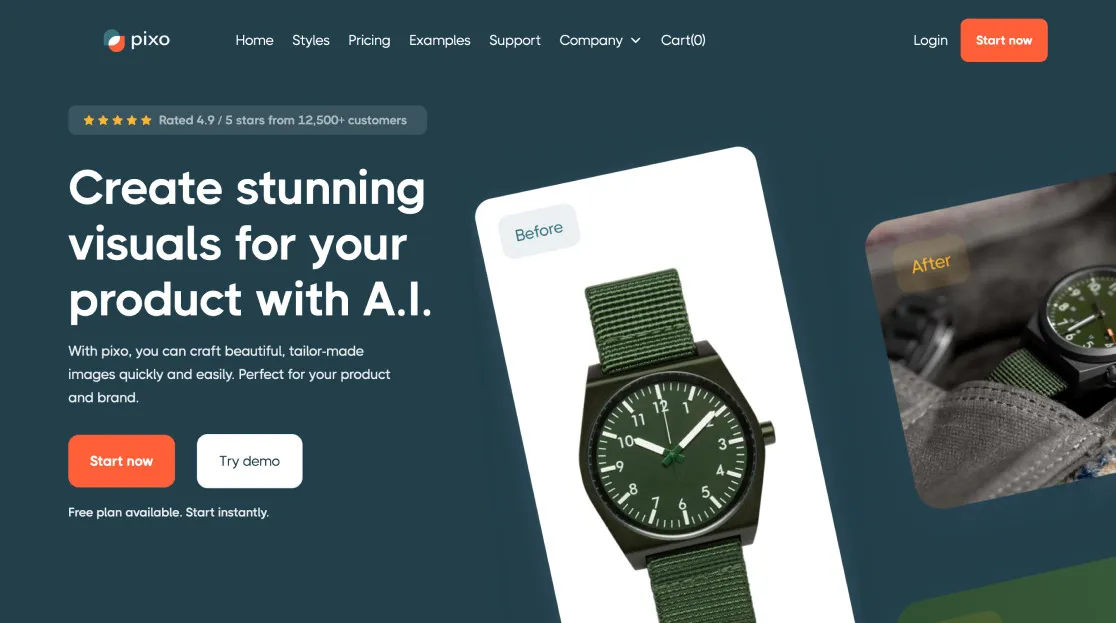
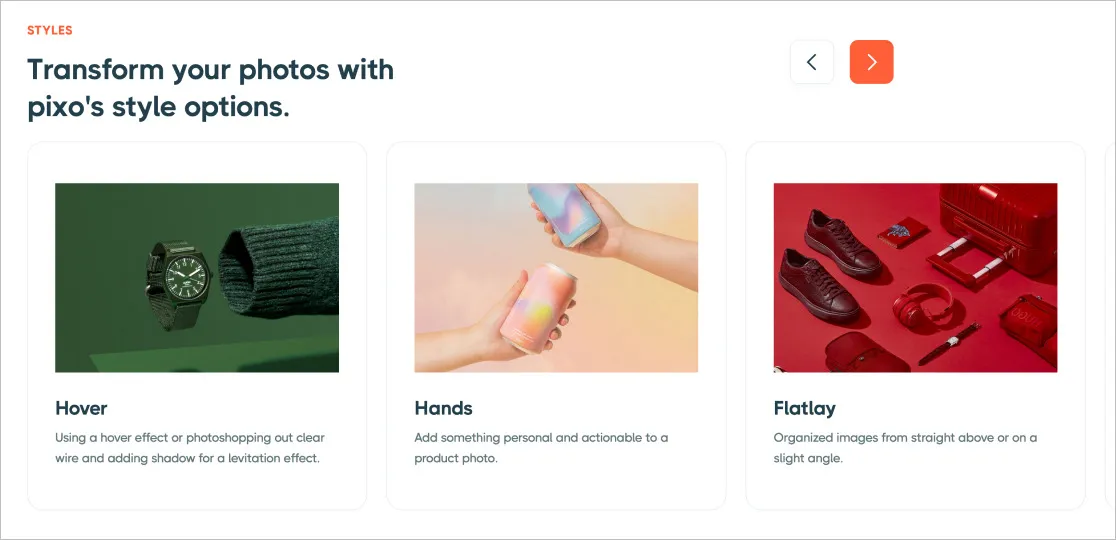
The end result was pixo, a user-friendly platform that empowers users to create stunning visuals quickly and easily. By incorporating the insights gained through user research and refining the design based on feedback, pixo achieved its goal of providing an intuitive solution that saves time, money, and increases sales for businesses. With features such as automatic background removal, color correction, and retouching, users can enhance their product images without the need for expensive equipment or professional photography skills.
The Designer's Identity: Creativity, Empathy, and Collaboration
Creativity was essential in crafting a visually appealing and innovative solution, including a modern web design with clear navigation and a cohesive appearance. Empathy was vital in understanding the needs and pain points of the target audience, informing design decisions that truly addressed their problems. Collaboration was key in working with various teams and stakeholders, including front-end development and project management, to ensure a seamless and successful project from concept to completion.
Outcomes and Results
The impact of the pixo design on users and businesses was significant, with users experiencing a streamlined process for creating high-quality product images, leading to increased efficiency and cost savings. Businesses saw higher conversion rates and improved customer satisfaction, resulting from the enhanced visual appeal of their product images.
Throughout the project, valuable lessons were learned in user-centric design, collaboration, and iterative design processes. These experiences have contributed to continuous improvement and growth as a designer, better equipped to address user needs and deliver effective design solutions in future projects.